


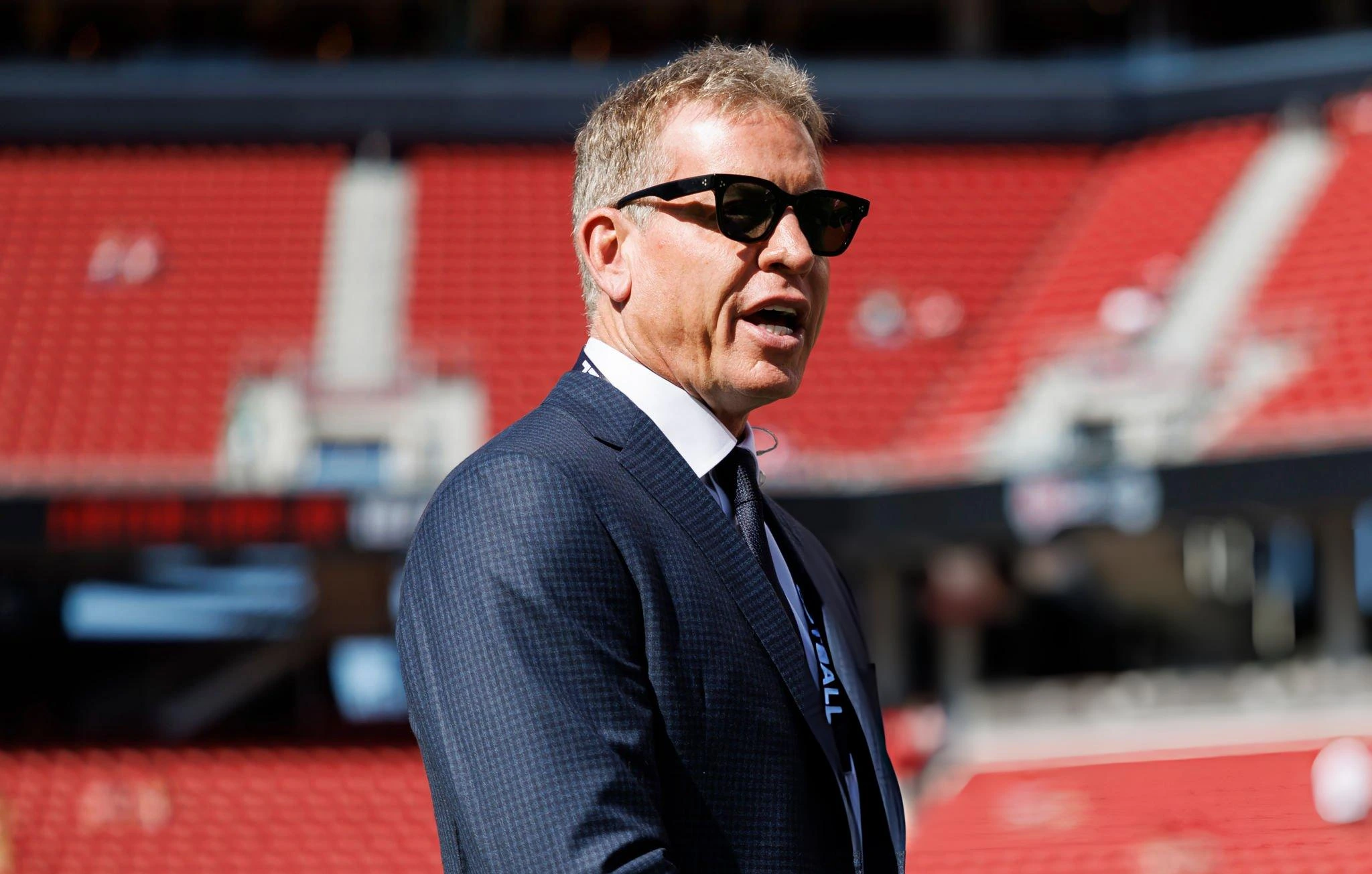
Troy Aikman’s legacy with the Dallas Cowboys came under fire after FOX analyst Craig Carton called the Hall of Fame quarterback an “average QB”. That assessment drew a strong response from Trey Wingo, who believes the argument strongly ignores the era Aikman played in and what made him so effective.
Wingo did not hold back when responding to Carton’s assessment. He argued that judging Aikman primarily through statistics without considering the context of his era misses the bigger picture. “The inability to contextualize data and eras here is truly astounding,” Wingo said. “John Madden on several occasions called Troy the most accurate QB he’s ever seen … especially in high pressure situations.”
Wingo made it clear where he stands on the debate. “I’ll side with John 100 times out of 100,” he said.
The inability to contextualize data and eras here is truly astounding. John Madden on several occasions called Troy the most accurate QB he’s ever seen …especially in high pressure situations. I’ll side with John 100 time out of 100 https://t.co/FSeNS9f0QS
— trey wingo (@wingoz) August 27, 2026 What's New
Average NFL analyst Craig Carton calls Hall of Fame QB Troy Aikman “average”
Carton made his controversial assessment while appearing on SNY, where he acknowledged that he could face criticism for his opinion.
“I’ll get killed for this”, Carton said. “I think Troy Aikman was an average quarterback. He had a pop-gun arm, but he played behind the best offensive line in football, had the best running back in football at the time, and arguably the best wide receiver in football, the best tight end in football, and a top-ten defense. If you put Patrick Mahomes on the Jaguars 10 years ago, you never even heard of Patrick Mahomes.”
Carton argued that Aikman benefited from playing on an exceptionally talented Cowboys roster. He pointed to Dallas’ offensive line, Emmitt Smith, Michael Irvin, Jay Novacek and a strong defense as major reasons behind the team’s success.
source on Google Go here and check the box
next to Cowboys.news
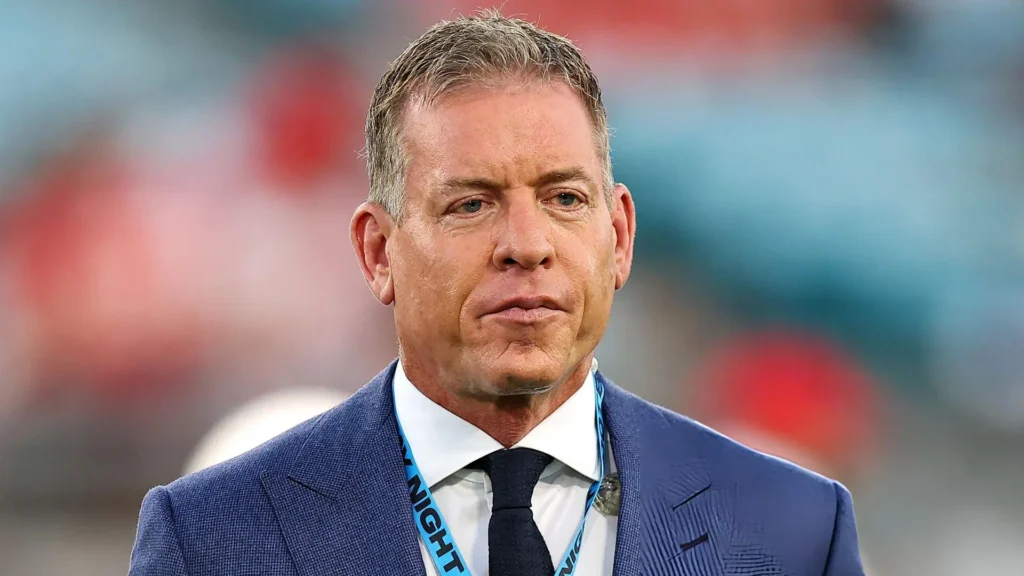
“He had a pop gun arm, but he played behind the best offensive line in football, had the best running back in football at the time, arguably the best wide receiver in football, the best tight end in football, and a top 10 defense,” Carton said.
There is some statistical context to Carton’s argument, as Aikman finished his career with 32,942 passing yards, 165 touchdowns and 141 interceptions. However, those numbers alone do not explain the quarterback Aikman was or the football environment in which he played.
Three Super Bowls in Four years: Troy Aikman was built for winning
Aikman entered the NFL as the No. 1 overall pick in 1989, joining a Cowboys team that had won only three games the previous season. Within a few years, he was leading Dallas back to the top of the NFL.
The Cowboys won three Super Bowls with Aikman as their starting quarterback in the 1992, 1993 and 1995 seasons. He also earned Super Bowl MVP honors after throwing for 273 yards and four touchdowns in Dallas’ 52 to 17 victory over Buffalo.
Aikman played alongside extraordinary talent, but that does not make his accomplishments meaningless. Great quarterbacks need great teammates, and Aikman consistently delivered his part of the equation when Dallas competed for championships.
His career completion percentage of 61.5 percent also reflected the precision that became one of the defining characteristics of his game. Aikman was not known for trying to overpower defenses with his arm, but he was exceptionally effective at putting the football where it needed to go.
The era matters when judging Aikman
The biggest problem with comparing Aikman’s statistics directly with modern quarterbacks is that the NFL has changed dramatically.
Today’s offenses throw the ball far more frequently, while rules have created an environment that generally favors quarterbacks and passing attacks. Aikman played during an era when running the football and controlling games were much bigger parts of offensive strategy.
Aikman himself explained why his Cowboys teams did not necessarily produce the massive passing numbers expected from elite quarterbacks today. “Those years of our success, we would lead the league in yards per pass,” Aikman told The Athletic. “It wasn’t like I couldn’t throw it. We threw the ball better than anybody. We just didn’t throw it as much.”
That distinction matters because Dallas did not need Aikman to throw 40 times every week. Aikman was never the quarterback who needed to dominate the stat sheet every Sunday. He was the quarterback Dallas trusted to execute when its championship hopes were on the line.
So calling Aikman average is a legitimate opinion, but it is also a conclusion that requires far more context than career statistics provide.
Aikman finished his career as a three time Super Bowl champion and a Hall of Famer. For Cowboys fans, that legacy is difficult to reconcile with the idea that he was simply an average quarterback.
Carton can make the argument that Aikman benefited from an exceptional supporting cast. But saying that Aikman was merely average ignores just how important he was to the Cowboys becoming the NFL’s team of the 1990s.